
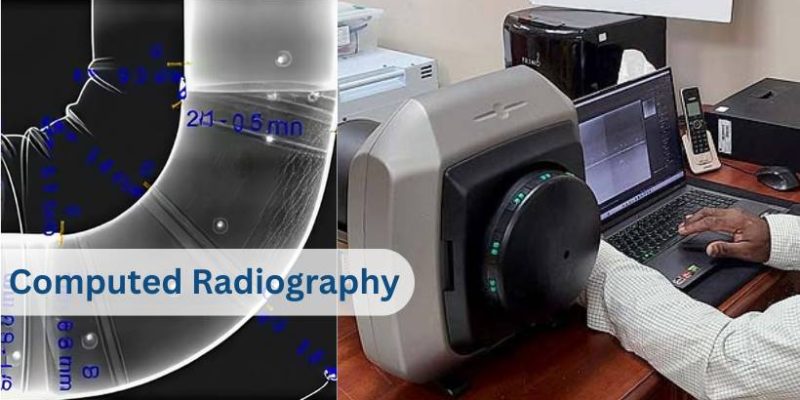
In the current industrial environment, safety, precision, and performance are the key operators in the oil & gas, power plants, petrochemicals, and manufacturing sectors. Computed Radiography (CR) is one of the technologies that are changing non-destructive testing (NDT). Being one of the newest voting digital imaging processes, CR has enormous benefits over traditional paper radiography; hence, it is the most desirable technique when it comes to quality, speed, and eco-friendly inspections.
The quality of Computed Radiography services provided by A-STAR Testing & Inspection in Malaysia is competent and encompasses excellent image resolution quality, exceptional clarity of defects, and total adherence to its international standards.
What is Computed Radiography?
Computed Radiography, the use of digital imaging in NDT, is an inspection technique to examine the internal structure of material without damage. The CR does not involve film in carrying out radiographic testing as used in conventional radiographic testing, but instead, it uses imaging plates (IPs), which give a latent image in digital form. A laser scanner reads the plate, digitizes the image, and allows its assessment.
Less opaque, speedier, and more adaptable flexible checks in keeping with the needs of the modern industry.
Basic Functioning of Computed Radiography
The CR process entails the following four steps:
- Exposure: This component receives an X-ray or gamma radiation, just as in the case of conventional RT.
- Storage: The radiations are absorbed by the imaging plate, and the image is stored.
- Scanning: A specialized scanner is being used to read the plate with the help of a laser and reproduce the image as a digital file.
- Analysis: The results are interpreted, improved, and reported using superior software by technicians.
CR has done away with the chemicals needed in developing films and has also limited the amount of radiation involved, and would therefore be a safer approach to the environment and to the workforce.
Major Advantages of Computed Radiography
1. More Rapid Turnaround Time
CR enables quick viewing and acquisition of images. This saves technicians time, as they can inspect images immediately instead of having to wait until film develops, which is essential in the case of shutdowns or any other inspection targeting emergency situations.
2. High-Quality Image
CR using high-resolution digital imaging has an increased defect identification accuracy. Utilization of zoom, contrast adjustment, and measuring tools is useful in making sure that nothing is missed.
3. Eco-Friendly & Cost-Effective
CR removes the use of dangerous radiography chemicals. It is also less expensive in the consumables required, such as films and dark material-needing supplies, thereby making it more sustainable.
4. Digital Archiving \& Sharing
Digital pictures are simple to store, access, and share on a computer. This enhances documentation controls and collaboration with quality groups, clients, and auditors.
5. Enhanced Safety
CR uses less radiation energy compared to ordinary RT, and therefore, inspection is safer for operators and the surrounding environment.
Computed Radiography Applications In Malaysia
Many sectors of industry in Malaysia depend on CR to conduct vital inspections:
- Liquid oil and gas field: Pipeline weld inspection, corrosion mapping, and checks done on flanges.
- Power Generation: Inspection of boiler tubes, examination of turbine blades, and study of high-temperature components.
- Aerospace & Marine: Structural analysis, weld testing, and fatigue analysis.
- Construction & Fabrication: Pressure vessel structural welds and integrity, and steel structure integrity checks.
At A-STAR Testing, we have developed our computed radiography services, and they can abide by international requirements as well as those of Malaysia. We ensure that the client is able to sustain the reliability of an asset without incurring expensive interruptions.
So why use A-STAR Testing to test Computed Radiography in Malaysia?
A-STAR Testing & Inspection has decades of experience in high-tech NDT techniques. Our technicians, ISO 9712 certified as well as ASNT certified, provide a quality inspection and will interpret the results accurately. We would spend on the recent CR by the world-renowned manufacturers, and our internal quality systems would ensure that each scan would be industry-specific by the industry-specific code, such as ASME, API, and AWS.
Our CR services refer to:
- Inspection of welds (butt, fillet, and socket welds)
- Corrosion and erosion tracking
- The detection of defects (casting, forging)
- Thickness and dimensions testing
Whether our work involves a refinery shutdown, an offshore platform inspection, or the new pipeline installation, we custom-build CR services to your schedule, your budget, and your compliance targets.
Computed Radiography Future in NDT
With the process of digitalization of industries, there is a demand for an efficient, data-driven, smart inspection practice. Computed Radiography can perfectly suit this vision. Technicians are able to incorporate it with asset integrity management systems, foresee the maintenance requirements, and offer real-time reporting.CR is not simply a value-added service in Malaysia, but it is rapidly becoming a pattern in conducting high-volume and high-precision checks.
Frequently asked questions (FAQ)
Q1. What is the difference between Digital Radiography (DR) and Computed Radiography (CR)?
Ans: Computed Radiography involves imaging plates, reusable plates scanned to form digital images, but on the other hand, Digital Radiography makes use of a direct capture of images using flat panel sensors. CR is more portable and easier on a field inspection, and DR is faster but not as flexible.
Q2. Is the Computed Radiography environmentally safe?
Ans: True, CR does not require chemical processing as well as single-use films, so it is an environmentally safe substitute for traditional radiography. It further saves radiation as opposed to traditional procedures.
Q3.How well does Computed Radiography detect defects?
Ans: CR also gives high-resolution digital images, and thus, one can detect internal defects like cracks, porosity, and corrosion. The ability to scan the defects and measure them is further advanced through software aids.
4. Do the international organizations recognize Computed Radiography?
Ans: Absolutely. CR is up to international standards of NDT like the ASME, API, AWS, and ISO 17636-2. It is also extensively used in the industries for code-compliant and critical inspections.
Q5. Is it possible to get the results of the inspection in digital format?
Ans: Yes. CR enables instant digital storage and safe transfer of results in several versions (JPEG, DICONDE or PDF). Clients are free to access, store, or review reports at any time through safe portals or through email.
Final Thoughts
Computed Radiography is the future of all industry inspections. It is quicker, risk-free, and smarter, and that alone makes it highly preferable to traditional ones. CR is the answer if you want to have a better inspection process, impact, and shorter turnaround time.
A-STAR Testing is at the forefront of Computed Radiography services in Malaysia. Our quality and innovativeness, together with the customer satisfaction that we offer, guarantee you the best-in-class service in all your inspection requirements.