
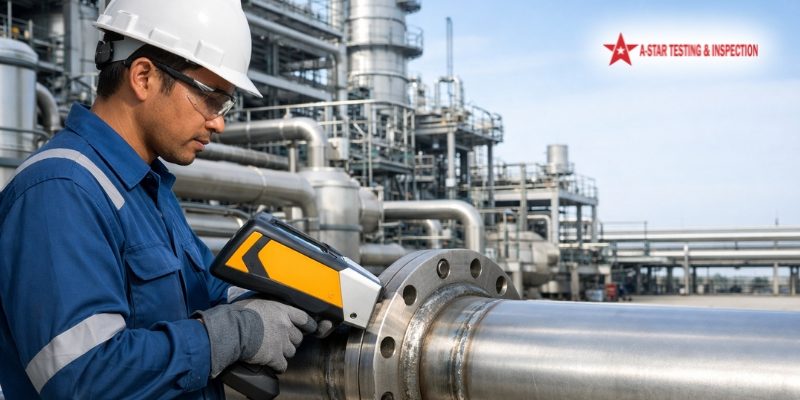
When using equipment in high pressure, high temperatures, or corrosive conditions, it is crucial to choose the appropriate material that is safe and with long-term durability. A false alloy in one of the pipelines, pressure vessels, or structural alloys may result in corrosion, malfunction of equipment, loss of production, and expensive repairs. That is why Positive Material Identification (PMI) Services in Malaysia are crucial to contemporary quality assurance and asset integrity programmes.
PMI is a dependable non-destructive testing (NDT) method to determine the chemical composition of metals and alloys before installation or use. However, by checking materials with engineering requirements, businesses may eliminate operational risks, meet international standards and enhance the reliability of plants.
What is Positive Material Identification (PMI)?
Positive Material Identification (PMI) is a testing procedure that is employed to establish the elemental structure of metallic materials. Rather than using material certificates, heat numbers, or visual marking, the inspectors do Positive Material Identification Testing to make sure that the material that is installed is what the design needs.
The most used is XRF Material Analysis (X-ray Fluorescence), whereby portable analyzers are used to identify the elements of alloys within a few seconds, and the analysis is done without destroying the component. This is a non-destructive, quick technique that has turned out to be the choice in manufacturing, fabrication, maintenance, and inspection projects.
Why Material Verification Is Essential
Material control is not merely a quality control process, but a very important safety step.
Industrial projects may have thousands of valves, pipes, flanges, fittings, and structural elements supplied by two or more different suppliers. Incorrect labeling, human error, or storage mix-ups may lead to the wrong material being installed. These errors might not be apparent when constructing, but they can lead to serious failures when the equipment is put into operation.
Material Verification Services Malaysia assists companies in ensuring that all vital parts are verified prior to installation, minimizing chances of unforeseen failures as well as safeguarding human life and property.
Industries That Depend on PMI Inspection
A number of industries have been using PMI Inspection Services Malaysia to guarantee safety, compliance, and reliability in operations.
Oil and Gas
The process of refineries, platforms, LNG plants, and pipes demand precise alloy verification since the equipment is subjected to corrosive chemicals and high-pressure working conditions.
Petrochemical Plants
Chemical processing plants rely on alloys that are corrosion-resistant. Checking of materials prior to commissioning aids in preventing chemical reactions due to the use of inappropriate metals.
Power Generation
High-temperature alloys are used in boilers, turbines, and pressure vessels in power plants. Precise Metal Grade Verification makes sure that every part is capable of operating under extreme conditions.
Marine and Offshore Engineering
Exposure to saltwater increases corrosion. PMI aids in certification of stainless steel, duplex steel, and specialty alloys in offshore structures and marine equipment.
Manufacturing and Fabrication
Manufacturers apply PMI in the fabrication process, including welding as well as quality checks in the end of the product to ensure that raw materials and finished products are up to the project specification.
How XRF Material Analysis Works
The handheld XRF analyzers in the modern world utilize low-energy X-rays on a metal surface. The material reacts by creating a special elemental fingerprint, and the inspectors can know alloy composition within a few seconds.
The benefits of XRF Material Analysis are:
- Rapid on-site inspection
- Non-destructive testing
- Immediate alloy identification
- High testing accuracy
- Online reporting and traceability.
- Reduced production downtime
Since no cutting or sample preparation is necessary on the components, inspections can be done very fast even in a running facility.
Compliance with International Standards
Numerous sectors demand material verification, which is documented to meet the accepted international standards.
PMI inspections typically assist in adhering to:
- ASME Boiler and Pressure Vessel Code.
- API quality requirements
- ASTM material specifications
- Quality management systems by ISO.
- Client-specific engineering specifications
Having accurate inspection records will also ease the process of audits, handing over projects, and planning maintenance, as well as show dedication to quality assurance.
Benefits of Professional PMI Services
Hiring skilled inspection personnel has more benefits than merely detecting metal grades.
The PMI professional services assist organizations:
- Prevent costly material mix-ups
- Improve workplace safety
- Minimize the risks of equipment failure.
- Increase asset reliability
- Preventive maintenance strategies.
- Verify supplier quality
- Minimize unexpected shutdowns
- Strengthen regulatory compliance
These advantages render PMI one of the most affordable inspection models for important industrial equipment.
When Should PMI Testing Be Performed?
Material verification will provide the highest value in the event of being applied to the entire lifecycle of the assets.
Inspection stages that have been recommended are:
- Incoming material inspection
- Before fabrication begins
- Prior to welding
- During construction activities
- Before commissioning equipment
- As part of regular maintenance shutdowns.
- Programs of asset integrity inspection.
- Substitution of components of a critical nature.
Material discrepancies are detected early on, thus avoiding costly rectification in the later stages of the project.
Why Choose A-Star Testing & Inspection?
A-Star Testing & Inspection offers quality inspection services that are aimed at helping with the safety, quality, and compliance needs of industries in Malaysia. The company provides precise material checks of projects in oil and gas, petrochemical, marine, manufacturing, and power generation industries using advanced testing equipment and seasoned inspectors.
Be it in the checking of incoming materials, in assisting shutdown inspections, or in supporting fabrication projects, professional PMI services enable organizations to be assured of every critical component.
Frequently Asked Questions
Q1. What is the purpose of Positive Material Identification?
Ans: PMI confirms the chemical composition of metallic substances to confirm that they are within the engineering requirements before installation or usage.
Q2. Is PMI destructive testing?
Ans: No. PMI is a totally non-destructive testing technique which leaves no damage to the tested part.
Q3. Which metals can be tested?
Ans: Verification of most metallic materials is possible, such as stainless steel, carbon steel, duplex stainless steel, nickel alloys, titanium alloys, and other specialty metals.
Q4. What is the accuracy of XRF Material Analysis?
Ans: The latest handheld XRF analyzers can offer very precise elements analysis in a few seconds when applied with trained inspectors using calibrated instruments.
Q5. What industries need PMI inspection?
Ans: PMI is usually used in oil and gas, petrochemical, power generation, marine, offshore, fabrication, manufacturing, mining, and heavy engineering industries as a quality assurance program.
Related services in Malaysia
Conclusion
Precise material checking is a key need of industries where the reliability and safety of equipment cannot be undermined. PMI assists in avoiding expensive failures and enhancing regulatory compliance and service life of important assets by verifying the chemical composition of metals prior to installation.
By investing in Positive Material Identification (PMI) Services in Malaysia, organizations are assured that all the components are to the necessary specifications and contribute to the safety of operations and quality of projects. Through cutting edge inspection technology, professional inspection, and best practice in the industry, A-Star Testing and Inspection assists firms in attaining reliable material inspection that safeguards assets and business performance.